I've lost count of the emergency calls that start with the same sentence: "The NI system is down, and we need a replacement by Friday." In my role coordinating rush repairs for test and measurement systems, I've handled more than 200 of these over the years, including same-day turnarounds for automotive, medical, and defense clients. And I'll say something that sounds arrogant: most of those emergency replacement orders didn't need to be emergency replacement orders.
Look, I'm not saying every dead chassis can be saved. But the decision to replace hardware should come after a diagnosis, not instead of one. And with the right support call, a digital multimeter kit, and sometimes a $20 plastic tool you'd never expect, you can save days and thousands of dollars.
Call National Instruments Support Before You Panic
Here's the thing: National Instruments support is not a sign of failure. It's a diagnostic shortcut. As of January 2025, every NI chassis and module has a serial number and a support record attached to it. According to NI's support portal (ni.com/support), you'll need that serial number for any repair or warranty inquiry. But the more useful part is what the support engineer can do with it: see error logs, run self-tests, and tell you whether a module is even talking to the backplane. That's not guesswork. That's access to data you don't have on a laptop.
In March 2024, a client called at 4pm with a test system that had to run a 48-hour soak test by Friday afternoon. Normal repair turnaround for their old DAQ chassis was 10 days. They were already shopping for a new one. I asked them to send me a screenshot of the error log before sending the system to us. It turned out to be a bad timing cable. The cable cost $38. The system was moving data by 7pm.
I've also watched the opposite happen. Last quarter alone, we processed 47 rush orders with a 95% on-time delivery rate. But the fastest fix is the one that never becomes a freight bill. A solid third of those 47 could have been handled remotely if someone had made one phone call to National Instruments support before deciding to ship the unit.
Buy a Digital Multimeter Kit Before You Buy Another Chassis
A basic digital multimeter kit is the first thing I pack in my go-bag. Not a $3,000 calibrator. Not a handheld scope. Just a decent meter with a continuity beep, a thermocouple input, and a set of test leads. A good digital multimeter kit costs somewhere between $120 and $250 depending on the accessories. Compare that to a rushed replacement chassis, which will cost several thousand dollars plus expedited shipping.
I've lost count of the times the answer was a fuse. The National Instruments logo on the front panel does not mean the chassis is dead. It means the chassis is powered on. That's a different statement. A continuity check between the power supply pins and the load will tell you more in five minutes than a week of debating whether to buy new hardware.
One caveat: if you're going to keep a multimeter kit on the shelf, learn how to use it before the emergency. The printed manual is not hard, but nobody reads it. Watch a video, test a known-good voltage, and then test a known-bad fuse. That's the whole tutorial.
Use the Right Tool—Even If It Looks Weird
The work order read: "DAQ module intermittent, likely damaged, needs replacement." When I opened the enclosure, I saw a tiny ball of dust on a backplane connector. The system was exposed to a lab environment with a vibrating fan. The intermittent signal was just a bad contact. I didn't need a replacement module. I needed to clean the connector.
I once used a pipette gun—the kind you use in a biology lab to dispense liquids, not a water gun—to blow air over a row of spring-pin connectors. It's not the approved method. It got the job done because it was what was in the lab. The point isn't the pipette gun. It's that a "hardware failure" was actually a contamination issue.
In another case, I couldn't find the shorted channel until I remembered how to use a FLIR thermal camera in the right way. If you're wondering how to use a FLIR thermal camera quickly, here's the practical version I rely on during shutdowns: set emissivity to 0.95 for painted enclosures, avoid shiny metal surfaces, and compare suspect components to identical healthy components on the same board. A temperature rise of more than 10°C above the healthy channel is usually your clue.
The Logo Fallacy
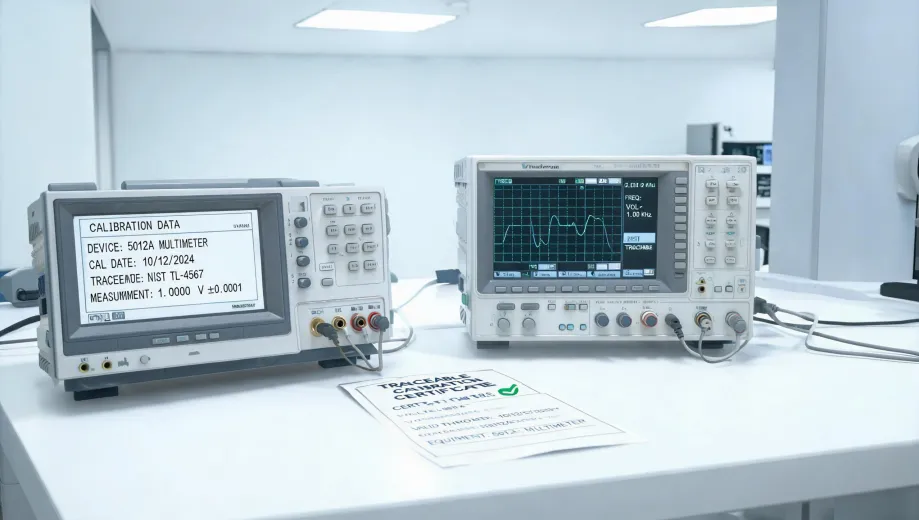
I'll be blunt: a photo of the National Instruments logo on a chassis is not a diagnostic. I ask clients for error codes, power supply voltages, LED states, and the last change made to the system. The logo only tells me who made it. That's a starting point, not a conclusion.
I used to think the logo was a certification of reliability. It is. But reliability of the product doesn't mean reliability of the entire test setup. The worst failure I've seen this year was caused by a loose earthing wire. The NI hardware was fine. The installation was not.
When Should You Actually Rush a Replacement?
Let me answer the objection before you make it: sometimes you should order the replacement. If the backplane is physically damaged, if the power supply shorted and took out three modules, if the unit is beyond its support life and the repair estimate is more than half the price of a new system—then yes, buy the new one. In those cases, I'd still call National Instruments support first to confirm the diagnosis and get the correct part number. But the goal of that call is speed, not second-guessing.
I don't believe in magical fixes. A support call will not revive a charred mainboard. But if you skip straight to replacement, you might pay $12,000 for a chassis when the real issue was a $30 cable. That's the definition of being penny-wise and pound-foolish. I saw a client save $2,000 by not renewing a support contract, then spend $6,800 on rush repair fees after one failure. Net loss: $4,800. And the worst part? The support contract wouldn't have fixed the actual failure—the issue was firmware—but it would have told us that in the first hour instead of the fourth day.
Build the Routine That Stops the Panic
Emergency work is mostly about reducing the number of unknowns. The engineers who call me rarely have bad intuition. They have incomplete procedures. We didn't have a formal process for storing error logs on our own test systems for years. That cost us once, in Q3 2023, when a system went down and nobody had a baseline. We spent an entire day trying to figure out whether a signal was wrong before we had a screenshot proving it was once right.
The third time that happened, I made a one-page checklist. It includes things like: capture the error code, take a photo of the front-panel LEDs, inspect the power supply with a multimeter, and call support with the serial number ready. That's the entire emergency process.
Had 2 hours to decide once whether to order a replacement DAQ or wait for support. Normally, I'd want three quotes and a full analysis. There was no time. I made the call based on trust in the support engineer, and it worked. Looking back, I should have insisted on a spare module in the budget earlier. At the time, the budget said no. It said yes after the first shutdown.
An Informed Customer Is the Best Customer
I'd rather spend 20 minutes explaining how to run a self-test than spend two hours arguing about a return authorization. That's not a slogan. It's a math problem. An informed customer asks better questions, makes faster decisions, and doesn't demand an impossible delivery window for a problem that was solved with a can of compressed air.
So here's my position: before you order a rushed replacement, call National Instruments support. If you don't have a support agreement, buy one—or at least set aside a simple digital multimeter kit and learn how to use it. And if you're looking at a thermal camera because the panel is running hot, remember that the camera is only as useful as your ability to compare temperatures between healthy and suspect channels. That's how to use a FLIR thermal camera in the real world, and it's also how to think about most test-system emergencies.
Are replacements necessary? Sometimes. Yes. I've shipped more than a few by Friday. But the best emergency is the one you avoid with a five-minute diagnostic and one phone call to the people who know the system best.