There's No Single “Best” Place to Buy Test Equipment
I've been managing our lab's procurement budget for six years. When I first started, I assumed the lowest quote always won. That mistake cost us about $3,200 in re-calibration fees and downtime across three orders in 2022. Now I look at total cost of ownership (TCO), not just the sticker price.
If you're searching for where to buy a Fluke multimeter, a national-instruments data logger, or a multimeter kit, the right answer depends on your scenario. Let me break down three common situations we see in R&D and test environments.
Scenario A: You Need Integrated, Automated Test Systems
This is where a modular platform like NI's PXI or CompactDAQ shines. If your team writes test sequences in LabVIEW or needs synchronized measurements across dozens of channels, buying from the national instruments official website or an authorized distributor usually makes sense.
Why? Because the hardware and software are designed to work together. I learned this the hard way in 2023. We tried to save 15% by buying a third-party DAQ module. It worked—until we needed driver updates. The vendor disappeared, and we spent three weeks writing custom code. That's not a bargain.
For this scenario, focus on:
- Software compatibility (LabVIEW, Python, C#)
- Calibration and service agreements
- Long-term availability of modules
When I negotiated our last NI order, I asked for a bundled service plan. It added 8% to the cost but eliminated $2,500 in potential emergency repair fees. That's the kind of trade-off you should calculate.
Per FTC guidelines (ftc.gov), vendors must substantiate claims like "fully calibrated" or "plug-and-play." Ask for documentation before you pay.
Scenario B: You Need Portable Handheld Tools (Multimeters, Moisture Meters)
Not every measurement needs a DAQ system. For quick field checks, a handheld multimeter kit is fine. And if you're measuring moisture in materials, a mo280 pinless moisture meter might be the right tool. But here's the catch: buying the cheapest kit often backfires.
I made the classic rookie mistake in my first year: I bought a $79 multimeter kit because it had good reviews. It failed its first calibration check. The replacement cost $180. My TCO spreadsheet now includes a “calibration failure rate” column.
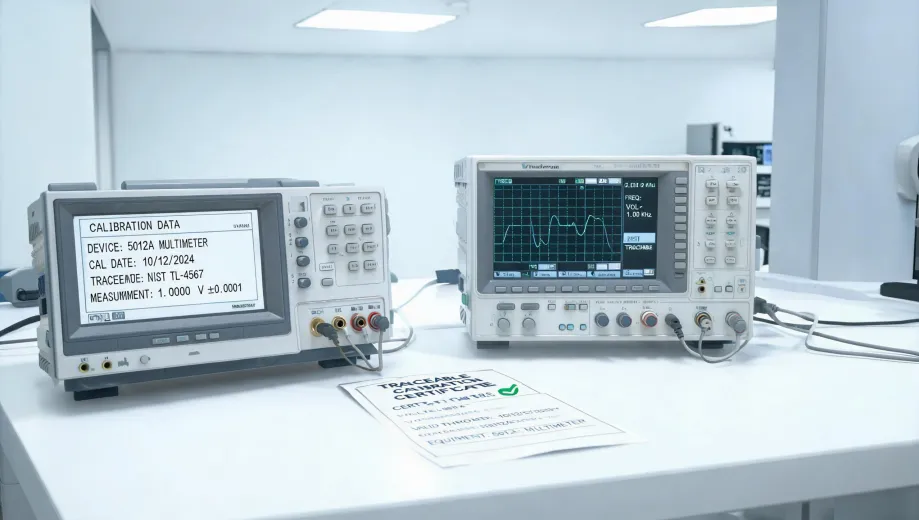
We compared three multimeter kits: one from a big-box store, one from an authorized distributor, and one from an online marketplace. The online marketplace unit failed calibration twice in 12 months. The authorized distributor unit came with a certificate and a 3-year warranty. Guess which one we still use? If you're specifically looking for where to buy fluke multimeter, note that authorized distributors often include calibration certificates. That's worth more than a $20 discount from an unknown seller.
For handheld tools, you have three sub-choices:
- Buy from a specialized retailer if you need traceable calibration and fast replacement. Expect to pay 10-20% more.
- Buy from a general industrial supplier if you need it tomorrow and can accept standard accuracy.
- Buy used only if you have an in-house calibration lab. Otherwise, the hidden cost of verification eats the savings.
Scenario C: You Need Long-Term Data Logging
Environmental monitoring, strain gauges, thermocouples—these require a national instruments data logger or a comparable system. Here, the decision isn't about the box; it's about the ecosystem.
One vendor quoted $3,800 for the logger but didn't mention the $600 annual software license. That's a 16% hidden cost per year. I now ask for a 3-year TCO quote in writing. I almost skipped the final compatibility test on a $4,200 order—no, $4,500, I'm mixing it up with the previous quarter. The vendor promised our sensors would work. They didn't. We lost two weeks of field data. Now I always request a loaner unit for a 48-hour test.
For this scenario, ask:
- Does the logger support your sensor types (thermocouple, RTD, strain, voltage)?
- Is the software license perpetual or subscription?
- What's the mean time between failures (MTBF) and warranty terms?
USPS shipping insurance (usps.com) won't cover a failed experiment. Budget for a spare unit if downtime costs exceed 10% of the hardware price.
How to Figure Out Which Scenario You're In
Use this quick decision tree:
- Do you need automated, synchronized measurements? → Scenario A. Go with national-instruments or equivalent modular platform.
- Do you need one-handed portability and quick spot checks? → Scenario B. Buy a reputable multimeter kit or moisture meter from an authorized dealer.
- Do you need unattended logging for more than 8 hours? → Scenario C. Prioritize sensor compatibility and software over upfront price.
My final advice: track every purchase in a TCO spreadsheet for six months. You'll see that the “cheap” option often costs 20-30% more in the long run (which, honestly, surprised me the first time). And if you're unsure, call the vendor and ask for a sample return policy. An informed buyer asks better questions and wastes less money.
Prices and policies change. Verify current details at national-instruments.com or with your authorized distributor.