-
My unpopular opinion: cheap test gear is a branding mistake
-
Argument 1: Your engineers judge you by the tools you give them
-
Argument 2: Clients notice the equipment on your bench
-
Argument 3: The hidden costs of "bargain" equipment
-
But what about tight budgets?
-
Reaffirming my position: quality is a form of respect
My unpopular opinion: cheap test gear is a branding mistake
I'm the office administrator for a 200-person R&D company. I manage all our equipment ordering—roughly $500,000 annually across 8 vendors. I report to both operations and finance. And after five years of managing these relationships, I've come to a conclusion that makes me unpopular with the bean counters: if you're buying test equipment based on the lowest quote, you're making a branding mistake.
I'm not an engineer. I don't design circuits or write LabVIEW code. But I see the downstream effects of every purchase order I approve. And I can tell you that the quality of the tools we hand our engineers directly shapes how they see the company—and how our clients see us.
That might sound dramatic. But I've seen it play out too many times.
Argument 1: Your engineers judge you by the tools you give them
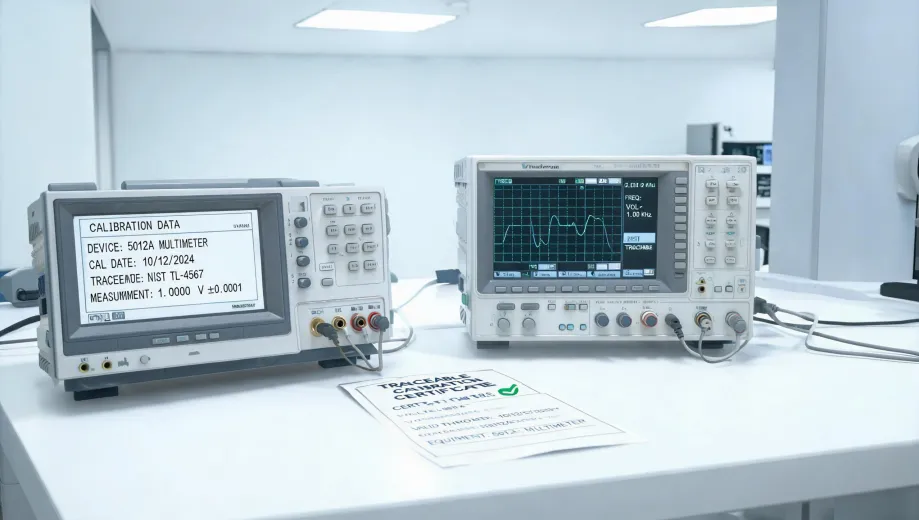
Back in 2022, I was under pressure to cut costs. A vendor offered a no-name digital multimeter for about 40% less than the premium brand we usually bought. I didn't check the warranty details closely—I just saw the savings. Big mistake. Three months later, the thing died. The "warranty" required shipping it to a third-party repair center at our expense, with a six-week turnaround. Our lead engineer needed it for a critical project. We ended up buying a replacement anyway. I ate the cost out of my budget, and worse, I looked like I didn't understand the team's needs.
That's when I learned: a multimeter warranty isn't just a line item—it's a promise that the tool will be there when you need it. Cheap gear often comes with cheap support. And when your internal customers are waiting, that's a problem you can't fix with apologies.
I only believed this after ignoring it once. The $120 I saved upfront cost us $250 for a replacement and two weeks of project delay. Now I verify warranty terms and support responsiveness before placing any order.
Argument 2: Clients notice the equipment on your bench
Here's something vendors won't tell you: your test bench is part of your sales pitch. We host client audits several times a year. They walk through our lab, and they see what we're using. When they spot a National Instruments PXI chassis with a thermocouple module and a high-speed oscilloscope, they relax. It signals that we take measurements seriously. It says we're not cutting corners.
I once had a client comment on our setup: "You guys use NI? That's what we use in our own validation lab." That single comment did more for our credibility than any slide deck. On the other hand, I've seen competitors with mismatched, bargain-bin gear try to explain away inconsistent readings. Clients aren't stupid. They notice.
I remember one project where we bought a budget thermal camera instead of the M232 model our engineers requested. The readings were off by 2–3 degrees Celsius in critical ranges. Our client's engineer caught the discrepancy during a review. We had to redo the entire thermal analysis. That $300 "savings" cost us a week of rework and a lot of credibility.
This is the core of my belief: the tools you choose are a visible extension of your brand. Whether it's an M232 thermal camera on a tripod or a simple megger insulation tester on a shelf, the brand and condition of that equipment tells a story. Invest in quality, and that story is "we care."
Argument 3: The hidden costs of "bargain" equipment
What most people don't realize is that cheap equipment rarely stays cheap. I've tracked this over 60+ orders. The initial price might be lower, but then you pay for:
- Proprietary accessories that cost more than the device itself.
- Software that doesn't integrate with your existing LabVIEW environment.
- Training gaps—like when you need to know how to use a megger insulation tester correctly, and the vendor offers nothing but a PDF.
- Inconsistent measurements that force your engineers to double-check everything, wasting hours.
With a platform like National Instruments, you get an ecosystem. The thermocouple module works with the same chassis as your oscilloscope. The software is consistent. Yes, the upfront cost is higher. But over three years, the total cost of ownership is often lower because you're not constantly patching, replacing, or retraining.
I'm not saying you should buy the most expensive option every time. That's not realistic. But I am saying that quality is cheaper than the alternative when you factor in downtime and frustration.
But what about tight budgets?
I get it. I report to finance, and I know the pressure to save money. But here's the thing: investing in quality doesn't mean buying the top-tier model for every task. It means choosing reliable platforms that scale with your needs. For our simple continuity checks, we use a basic handheld unit—it's fine. But for anything that touches client deliverables or long-term data, we standardize on National Instruments.
And I'll be honest: this approach works for us because we're a mid-size R&D firm with predictable workflows. If you're a startup with unpredictable funding, the calculus might be different. But even then, one $800 mistake teaches you fast that the cheapest option isn't always the smartest.
Reaffirming my position: quality is a form of respect
You might argue that branding is marketing's job, not procurement's. I disagree. Every purchase you approve sends a message: to your engineers, to your clients, and to your own team. When you choose quality, you're saying, "I respect your work enough to give you tools that won't fail."
According to FTC guidelines (ftc.gov), advertising claims must be truthful and substantiated. As of January 2025, that principle applies to the equipment we put in front of clients, too. If we claim to be a serious testing operation, our gear better back that up.
So next time you're tempted by a rock-bottom price on a data logger or an oscilloscope, ask yourself: what story will this purchase tell? Because in my experience, the cheapest option often costs the most—just not in the way you expect.