If you found this article because you typed one of these into Google — "national instruments," "national instruments logo," "multimeter hvac," "magnetic flow sensor," "how to reset mitutoyo digital caliper" — you're probably in one of three very different situations. And honestly? The right advice depends on which one.
I've been handling procurement for an engineering services company for about five years now. We're not a massive operation — 60ish people across two locations, with roughly 60 to 80 annual orders for test and measurement gear flowing through my desk. I report to both operations and finance, which basically means I get to hear about it from both sides when an order goes sideways. Along the way, I've made almost every mistake you can make in this category, and I've had time to figure out what actually works.
Here's the thing nobody tells you: there is no universal answer for "what should I buy?" or "where do I even start?" The search term you used says more about your situation than any product review ever will. So let me break it down into three buckets and give you the playbook for each.
Three Scenarios, Three Playbooks
The searches above cluster into three buckets:
- Scenario A — Platform research: You're searching "national instruments" or "national instruments logo." You're not buying a single widget; you're assessing an entire ecosystem — and possibly checking whether that site you landed on is actually official.
- Scenario B — Specific job, specific tool: You're searching "multimeter hvac" or "magnetic flow sensor." You have a task on the calendar, and you need the right instrument to complete it.
- Scenario C — Equipment not cooperating: You're searching "how to reset mitutoyo digital caliper." You already own the gear. Something's gone sideways, and you need factual, verifiable help right now.
Each of these requires a totally different approach. Let me walk through them.
Scenario A: You're Evaluating the National Instruments Ecosystem
If your search started with "national instruments" or you're checking the NI logo to make sure you're on the official site — I've been there, those look-a-like reseller pages are sneaky — you're at the platform evaluation stage. This is a big deal. You're not buying a screwdriver; you're choosing a toolbox.
Software Ecosystem Matters More Than Hardware Specs
It took me about four years and roughly 150 purchase orders to understand that when you're buying into a platform, hardware specifications matter less than the software ecosystem around them. A DAQ module can look fantastic in a comparison table — impressive sample rate, solid resolution, great price per channel. But if the software integration eats weeks of engineering time, the "good price" evaporates fast.
What I mean is this: the real cost of a test and measurement platform isn't the line item on the purchase order. It's the hardware, plus the software licenses, plus the learning curve for your engineers, plus the time you lose when something doesn't communicate cleanly with your existing tools. And by that I mean you need to verify integration claims before you commit, not after.
Everyone in our operations department told me to check software compatibility before approving hardware. I didn't listen — once. I approved a measurement module based purely on its analog specs. It hit all the numbers on paper. But getting the data stream into the format our analysis team actually needed? That took a week of wrestling with drivers and middleware. The project budget quietly ate that time. Looking back, I should have asked the vendor for a reference implementation from a similar company first. At the time, I figured specs were specs. They are not.
Work From Official Sources Only
Per FTC guidelines (ftc.gov), advertising claims must be truthful and substantiated with evidence — but that doesn't mean every listing that surfaces in a search has actually been verified. My rule now: if it's not on the manufacturer's official site, it's not a spec. For NI specifically, that means navigating to ni.com directly. Don't trust a third-party summary page when you're about to commit serious budget.
A few genuinely useful things I've learned about evaluating NI:
- Start with the software story. If LabVIEW compatibility matters for your team — and for most teams it does — verify it before you look at hardware. Hardware revisions come and go; the software commitment is the longer-lasting decision.
- Ask about modular expansion. NI's PXI and CompactDAQ platforms are designed to grow. We started with a single CompactDAQ chassis and a few modules. As project scopes expanded, we added modules rather than replacing systems. That modularity has real dollar value.
- Get an official quote. Don't rely on third-party listings for pricing. NI's official channels give you current configurations, support options, and warranty details. A reseller's price might look better until you realize it doesn't include the support tier you need.
And if your search was specifically for the logo? That's more practical than it sounds. Confirming you're on the real nationalinstruments.com site keeps you away from look-a-like vendors. I've seen team members place orders with a domain that looked correct in a search result but was actually a reseller with entirely different terms. Logo-checking is a legitimate step.
Scenario B: You Need a Specific Tool for a Specific Job
Searching "multimeter hvac" or "magnetic flow sensor"? Completely different world. You don't want a platform. You want something that measures a specific physical quantity, reliably, so you can finish the work and move on.
This is where my "quality equals brand" conviction comes from. Here's the story:
Two years ago, I ordered a batch of budget multimeters for our HVAC maintenance contractors. The price was hard to argue with — about $25 per unit versus $85 to $90 for the mid-tier option I normally bought. I was trying to be a good steward of the budget. The techs hated them within a week. The displays washed out in direct sunlight. The test leads felt brittle. Two units stopped reading resistance within the first month. I had to reorder the quality versions anyway and eat the shipping costs, plus a week of contractor downtime.
What I failed to see: the tools your people carry are part of your brand. When one of our technicians walks into a client's mechanical room, the meter in their hand makes an instant impression. A flimsy-looking instrument with a scratched case tells the client your company cuts corners. That $60 per-unit difference? It's the cheapest marketing expense you'll ever sign off on.
When you're buying for a specific job, here's what actually matters:
- Environment rating, not just specs. For HVAC work, a multimeter needs appropriate safety ratings — Category III is commonly expected for distribution-level measurements. Basic voltage spec lists often leave this out, so read the official datasheet.
- Sensor sizing and compatibility. With a magnetic flow sensor, for example, the flow tube size must match your actual pipe diameter, and the output signal has to be compatible with whatever you're logging into. I've seen orders placed based on connector type alone. That never ends well.
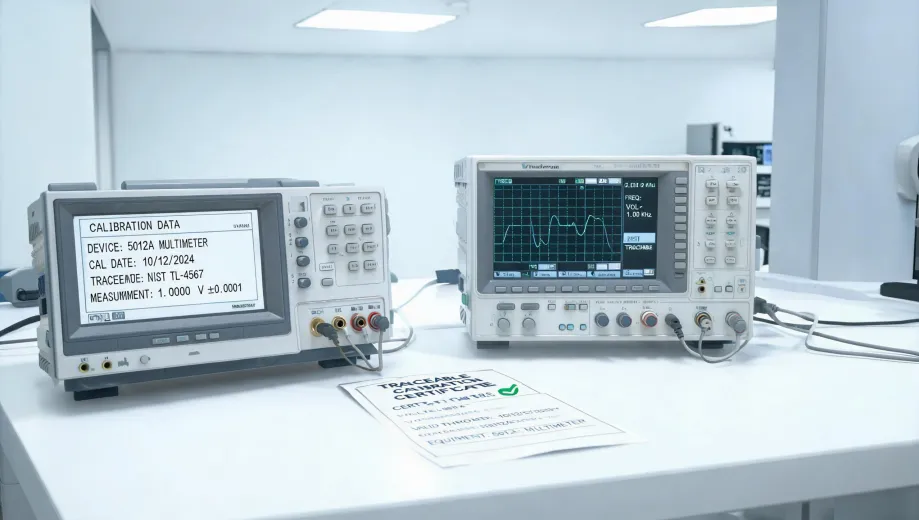
- Calibration documentation. If your measurements feed compliance reports, ask about calibration certificates before you commit. A vendor who couldn't provide proper documentation cost us a re-test fee that tripled the savings from their low quote. Now I verify documentation capability before placing any order with an unfamiliar supplier.
To be clear: I'm not saying always buy the most expensive option. That would be financially lazy, and I'd never pass that by finance. What I am saying: understand what the tool needs to do in your specific environment, and buy the instrument that does that job demonstrably well. Sometimes that actually is the budget pick. Just don't assume it is without checking.
Scenario C: You Already Own the Equipment and It's Misbehaving
If you searched "how to reset mitutoyo digital caliper," you're not shopping. You're troubleshooting. Totally different playbook.
First piece of advice: check the manufacturer's official documentation before doing anything else. This sounds painfully obvious, but you wouldn't believe how many support tickets we've opened where the answer was on page 6 of the manual.
For Mitutoyo digital calipers specifically — and I've handled more of those than I ever imagined when I took this job — the "reset" issue is almost always a battery or zero-point problem, not a hardware failure. The standard procedure is simpler than most people expect: remove the battery, wait about a minute, reinstall it, and then close the jaws fully to re-establish the zero point. That handles the overwhelming majority of reset situations.
Why do I know this? Because I didn't learn it the smart way. The first time a caliper went haywire, I submitted a service request to the manufacturer before trying anything. The support rep — who was perfectly professional about it — asked, "Did you try re-seating the battery?" The answer, embarrassingly, was no. Now we keep spare batteries in the same drawer as the calipers. Costs about four dollars and saves three days of waiting.
If you have to send equipment back for repair or recalibration, a couple of practical notes:
- Use a trackable shipping method. Standard first-class mail might be fine for small items, but if the package exceeds USPS large envelope dimensions (12" x 15" max), you're into parcel territory with different pricing and delivery expectations. It's worth thirty seconds to check usps.com before you assume.
- Never leave it in a residential mailbox for pickup. Federal law (18 U.S. Code § 1708) restricts what can be placed in mailboxes to USPS-authorized mail. Not worth the regulatory headache.
This scenario extends to NI hardware too. If you own NI equipment and something's not cooperating, ni.com/support has a knowledge base that covers a surprising range of issues. Searching "national instruments website" and landing on the official support portal beats scrolling through third-party forums for two hours. I know because the forums were my first stop on more than one occasion.
How to Tell Which Scenario You're In
Still unsure? Here's a quick self-check.
Ask yourself: Am I choosing a platform, completing a task, or fixing a problem?
If you're evaluating whether NI's ecosystem makes sense for your organization's ongoing measurement needs — you're in Scenario A. Budget serious evaluation time and stick to official sources.
If you have a specific test or measurement job on your calendar this week, and you need the right tool to get it done — you're in Scenario B. Focus on environment fit, calibration documentation, and the message your tools send to clients.
If the equipment is already sitting on your bench and your search is about making it work again — you're in Scenario C. Start with the manual, then the manufacturer's support site. Then check the battery.
These scenarios blur sometimes. You might search "magnetic flow sensor" (Scenario B) and realize your team actually needs a broader data acquisition platform (Scenario A). Or you might try to reset a caliper (Scenario C), determine it's truly dead, and then have to buy a replacement (Scenario B). That's fine. The framework isn't meant to confine you — it's meant to make sure you're asking the right questions at the right stage.
Bottom Line
After five years of managing these purchases, I've come to believe that the "best" approach to test and measurement buying is highly context-dependent. There's no single right answer. But there is a right starting point.
Researching a platform means evaluating the system — software, ecosystem, support — not just the hardware table. Buying a single tool means matching it to the environment and the work, and remembering that your tools represent you. Troubleshooting means going to the source first, not the forum.
Start with your actual situation, and the right decision gets a lot easier to see.