-
When This Checklist Works
-
Step 1: Define the use case, not just the product name
-
Step 2: Check software before hardware
-
Step 3: Build a total cost model
-
Step 4: Get lead times in writing
-
Step 5: Verify country of origin and service support
-
Step 6: Have a technical person review the spec
-
Step 7: Confirm invoicing and legal terms
-
Final Checks and Common Mistakes
When This Checklist Works
If you're the person who gets asked to buy scientific and test equipment, this checklist is for you. I've been the office administrator for a 90-person engineering company since 2019. I manage around $120,000 a year in lab equipment and supplies across 11 vendors. It's not a huge budget compared to R&D, but it's big enough that mistakes hurt.
This checklist is not for simple office supplies. It's for purchases where the product has a spec sheet, a lead time, or a warranty. If you're buying a National Instruments data logger, a National Instruments oscilloscope, an HPLC system, or even pipette pens, you need more than a price quote.
Step 1: Define the use case, not just the product name
Most requests sound like this: 'We need a national instruments data logger.' Okay, what are you measuring? Temperature? Vibration? Strain? NI's data logger products are modular. A CompactDAQ base with a thermocouple module is not the same as one with a high-speed voltage module. They look similar, but they aren't interchangeable.
Get the engineer to write down signal type, channel count, sample rate, and environment. Don't rely on 'same as last year.' I learned that after we ordered 'the same data logger' and it didn't have the right input modules. We caught it before shipping, but only just barely.
Step 2: Check software before hardware
'National Instruments oscilloscope' is one of those terms that sounds simple. It isn't. NI doesn't sell a single benchtop oscilloscope. It sells modular oscilloscope devices for platforms like PXI. Those modules often need software to display waveforms. If your team uses LabVIEW, great. If they use Python or something else, verify driver support before you create a PO.
According to NI's official product pages (ni.com, accessed January 2025), many oscilloscope modules come with drivers for LabVIEW, LabWindows/CVI, and Python. But 'compatible' doesn't automatically mean 'ready to go in your setup.' Ask for a configuration example before you buy.
Step 3: Build a total cost model
My first year managing purchases, I assumed the lowest quote was the best quote. That's not true.
In 2023, we bought a new HPLC system for our analytical lab. The base quote looked fine. By the time we added the analytical column, guard cartridges, vial racks, software license, and preventive maintenance agreement, the total was 26% higher. Not ideal, but it was the right call. The alternative was a surprise purchase order three months later.
When you compare quotes, list every line item: hardware, software, installation, training, freight, taxes, calibration, and service plan. If a vendor says 'all-inclusive,' ask for a written breakdown. If they say a certain price is the 'best price,' ask what is excluded. There's always something.
Step 4: Get lead times in writing
A phone quote is the least reliable piece of information in procurement. I learned this when a vendor told me 'probably two weeks,' and then their email confirmation said '6 to 8 weeks.' I cancelled that order.
Ask for lead time by email. If the item is a National Instruments data logger module, lead times vary by product availability. An HPLC system might be weeks or months. Even pipette pens can be backordered—I once had a $20 pipette pen order delay an entire lab restock because the distributor's system showed stock when they had none.
This is also where time certainty matters. In March 2024, we paid $380 to rush a replacement module for a test stand. Was it annoying? Yes. But missing the customer's validation window would have cost us several times that. The extra fee bought certainty, not just speed.
Step 5: Verify country of origin and service support
For precision measuring tools, country of origin matters. If someone asks 'where are Mitutoyo calipers made,' the short answer is that Mitutoyo is a Japanese brand with manufacturing operations in Japan and other countries. According to Mitutoyo's official company information (mitutoyo.com, accessed January 2025), the company started in Japan and still has Japanese manufacturing operations. The exact origin of a given caliper model may vary, so get it on the PO.
For National Instruments products, ask about lifecycle status. Is the model active, end-of-life, or in transition? The last thing you need is to buy a 'current' module that gets discontinued the quarter after it arrives.
Step 6: Have a technical person review the spec
I'm an admin, not an engineer. I can compare invoice terms and delivery dates. I cannot judge whether one module is better than another. So my rule is: no PO without a second set of eyes from whoever will use the item.
This isn't about distrust. It's about catching wrong assumptions. A few months ago, a researcher asked for a National Instruments oscilloscope. The engineer found a module with 100 MHz bandwidth; the application needed 500 MHz. A 5-minute spec review saved us a week of delays. Dodged a bullet.
Step 7: Confirm invoicing and legal terms
This is the step I always tell new admins about. A vendor can have great prices and still create a headache if their invoice doesn't match the PO.
I once approved a $3,000 order based on verbal promises. The vendor couldn't provide a proper invoice—they sent a handwritten receipt. Finance rejected the expense, and I had to eat it out of the department budget. Now I verify invoicing capability before any order. Can they issue proper invoices? What are the payment terms? Are there restocking fees? What happens if equipment arrives damaged? Get it all in writing.
Final Checks and Common Mistakes
Here's the collection of small things that cause big problems.
- 'In stock' is not a promise. Ask for the quantity and the expected dispatch date.
- If you don't have a documented spec, you're not buying—you're guessing.
- Expedited shipping doesn't matter if the item isn't actually available to ship. Confirm availability before paying the rush fee. (Note to self: ask why it's urgent before selecting 'rush'.)
- For an HPLC system or any large instrument, get the service plan cost at the same time as the quote.
- Keep a simple file: PO number, vendor contact, promised delivery date, actual delivery date.
One common mistake is paying extra for 'guaranteed delivery' without checking what the guarantee actually covers. Does the vendor refund the rush fee if they miss the date? Do you get a credit? If the answer is 'we'll do our best,' you haven't bought certainty. You've bought hope.
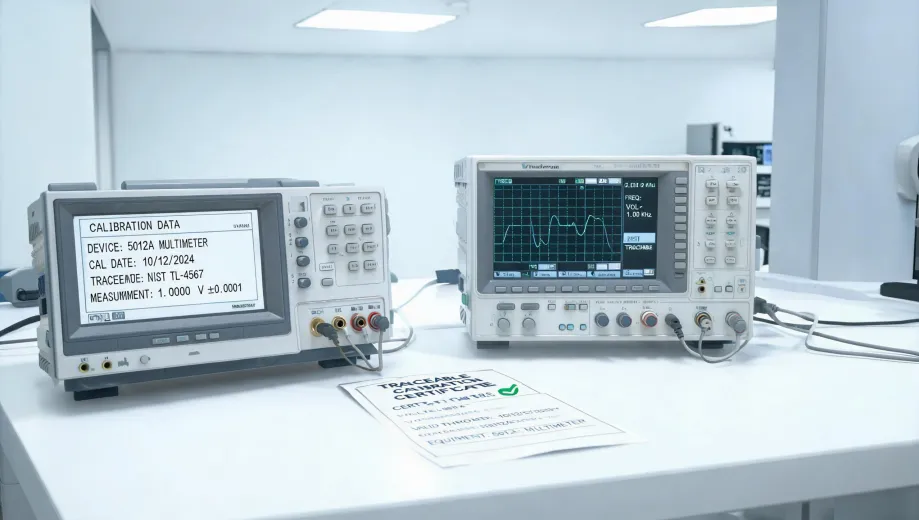
Another mistake is forgetting the calibration certificate. For precision tools, including Mitutoyo calipers, ask for the certificate and the country of origin on the purchase order. It saves you from customs issues, quality audits, and a lot of arguing later.