The invoice price is a fiction
If you're choosing between a hioki DT4256 digital multimeter and a $90 meter from a name you can't pronounce, the $90 meter is not cheaper. It's just cheaper on the invoice.
I manage a $180,000 annual test-and-measurement budget for a 220-person industrial maintenance operation. Over the past six years, I've reconciled 300+ purchase orders against their original quotes in a tracking spreadsheet I built after getting burned one too many times. The pattern is consistent: the instruments with the lowest invoice prices generate the highest total cost of ownership by month 18, almost every time.
What I mean is this. The clean number on a quote — say $220 for a hioki DT4256 digital multimeter — is roughly 60% of what you'll actually spend in the first year. The rest shows up in calibration certificates, accessory replacements, software licenses, and technician training. None of which the sales rep put in the email.
Where the hidden costs live
Multimeters: calibration and test leads
The hioki DT4256 is a good example of a tool where the invoice price is honest — if you buy from the right channel. Around $200-250 (based on distributor quotes I collected in January 2025; verify current pricing). Compare that to a $90 budget multimeter. On paper, I save $130.
I went back and forth between the hioki DT4256 and a $90 alternative for about two weeks. The $90 option let me buy five meters for the price of one hioki. The hioki offered calibration traceability and a warranty longer than the meter's replacement cycle. I went with hioki — not because the brand name matters, but because the TCO spreadsheet said the $90 meter was a false economy.
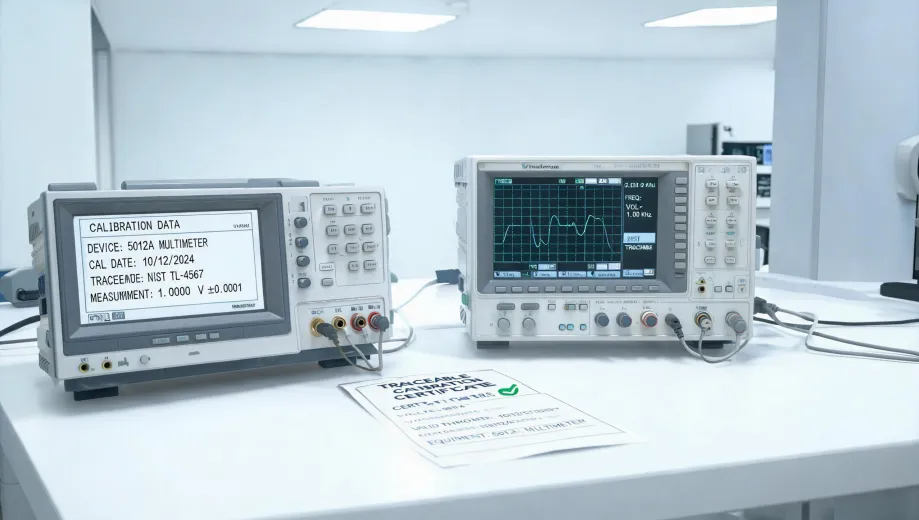
Then the calibration certificate shows up. The budget meter either doesn't include one or charges $45 for a NIST-traceable version. The hioki distributor I use bundles it. The budget meter's test leads fail within a year — I've replaced three sets at $22 each. The hioki leads are not indestructible, but they're pretty robust. And when the budget meter drifts out of spec, there's no calibration service, so you replace the whole unit.
Over 18 months: budget meter = $90 + $45 + $66 + $90 = $291. hioki DT4256 = $220. That's a $71 gap in the wrong direction. And I still have the hioki five years later; the budget meter went in the e-waste bin.
Power quality analyzers: sensors are the real invoice
The hioki PQ3198 power quality analyzer is a cleaner example of quote opacity. The base unit quote looks reasonable until you ask what's included. Current sensors are usually separate, and a standard set of clamp-on sensors can add 40-60% to the base unit price. Some vendors quote the analyzer with one sensor set and let you discover you need a second set for a different application (ungenerously, after the PO is signed).
Software is the same story. Some analyzers include analysis software in the purchase price; others charge an annual license. If you're doing power quality work at multiple sites, an annual license at $400-600/year adds up fast. I budget for a 3-year software cost on every analyzer quote now — I don't care what the brochure says, I care what the renewal invoice will say.
This is where the hioki PQ3198 earns its place on my shortlist: the analysis software is typically included in the purchase price, not licensed annually. Packaging varies by region, so I verify with the distributor every time — but when it's included, the TCO math changes significantly.
Thermal cameras and flow sensors: training and installation
Thermal imaging is where the invisible costs really bite. A TG298 thermal imaging camera might look like a bargain until you factor in the training curve. Learning how to use a FLIR thermal camera properly — emissivity settings, reflected temperature compensation, spot size ratio — takes real time. I budget 8-12 hours of technician time for the first user, plus 4-6 hours for the second. At $45/hour loaded labor, that's $540-810 in invisible cost that doesn't appear on any quote. The same applies to a TG298 thermal imaging camera if your team hasn't used one before.
Ultrasonic flow sensors have a similar profile. The sensor itself is one line item; the installation is another. You need a clean pipe surface, correct coupling compound, and often a shutdown window. My worst experience: a $1,200 ultrasonic flow sensor install that became a $3,800 job because the pipe wasn't accessible without scaffolding (ugh, that one still stings).
The pushback I get
A colleague — smart guy, whose opinion I respect — challenged my whole thesis last year. His argument: "Vendors who claim to be transparent just build everything into the sticker price. The low-ball vendor is cheaper if you're disciplined about add-ons."
He's not wrong that front-loading can happen. I have mixed feelings about it, honestly. Part of me resents paying for services I won't use — extended warranties, training credits, calibration plans I'd never buy separately. Another part of me knows that seeing what I'm paying for is worth something. With the low-ball quote, I'm comparing against a phantom; with the transparent quote, I'm comparing line by line.
Here's the test I use now: ask the low-ball vendor for a "fully loaded" quote — calibration certificate, first sensor set, software license, training, delivery. In my experience, they either refuse (red flag) or the number comes in 15-25% higher than their initial quote. At that point, the transparent vendor's "higher" price isn't higher at all.
What I do now
I still kick myself for a 2021 purchase where I didn't ask about the software license. The base unit looked $600 cheaper than the alternative. The annual license ate that savings by year two, and the data export format locked us in. If I'd asked one question — "is the analysis software included in perpetuity?" — I'd have made a different call. That mistake cost us roughly $1,800 over three years, which is real money in a maintenance budget.
My procurement policy now requires three numbers on every instrument quote:
- Unit price as quoted
- First-year consumables, calibration, and accessories
- 5-year TCO estimate including training and software renewals
If a vendor can't or won't fill in all three, they don't make the shortlist. That policy has cut our budget overruns by roughly 30% since I implemented it in 2023 — and it's made vendor conversations a lot more honest. The reps who push back on the 5-year number are usually the ones who were going to surprise me later.
ISO/IEC 17025 is the international standard for calibration laboratory competence. A calibration certificate from an accredited lab is not the same as a manufacturer's conformance certificate — ask which one you're getting before you compare prices.
The cheapest test equipment quote is usually the most expensive. Not always — but more often than not. The instruments that survive my TCO spreadsheet tend to be the ones still on the bench five years later, not the ones that got replaced twice.