Saturday, March 16, 2024. 7:40 a.m. Thirty-seven Itron ultrasonic water meters had been sitting in our receiving bay for eighteen hours, and I had until Monday morning to clear them before the installation crew showed up.
If I didn't, the whole Monday install window—fifteen people, two crane trucks, a permit for a trunk main section spanning three city blocks—would collapse. If you've ever dealt with municipal permits, you know: rescheduling isn't rescheduling. It's starting over.
My name's Sarah Chen. I've been quality and compliance manager at a mid-sized municipal water utility—roughly 120,000 service connections in the Midwest—for four years. Last year alone, I handled about 1,700 metering devices. I've rejected maybe 10–15% of first deliveries, depending on the vendor and the product line. That number looks bad on paper. But it looks worse when you discover the problem in the field.
(Should mention: we inspect everything within 24 hours of arrival. Storage introduces environmental variables I can't control, and I hate variables.)
The batch was Itron Intelis wSource ultrasonic water meters—part of a district-wide retrofit involving thousands of smart water meters, HVAC flow meters, and supporting infrastructure. They'd arrived Friday afternoon on March 15. Monday morning install. System commissioning deadline of March 31 looming over the whole thing.
My inspection protocol normally takes two days. I compressed it into six hours.
And that's when things got interesting.
The Moisture Meter Reading
Unit eight in the third row had condensation—atomized moisture behind the inner display cover. Not droplets. A fog. I measured the same spot with our mr277 moisture meter. Reading: 83% RH. Our spec for sealed electronics enclosures is 55% RH. Out of tolerance.
I checked the rest. Nine units showed similar issues, varying degrees. The simplest explanation was temperature fluctuation during transit causing condensation. But the seals on all affected units looked intact. That combination bothered me.
We don't just check meters, by the way. In the same facility, I maintain quality checklists for pump stations, valves, and electrical cabinets—places where a leakage clamp meter is standard equipment. I bring this up because things that look simple usually aren't. Last week I found a loose connection in a distribution panel that delayed an install by three days—and nobody was specifically at fault. Just normal wear.
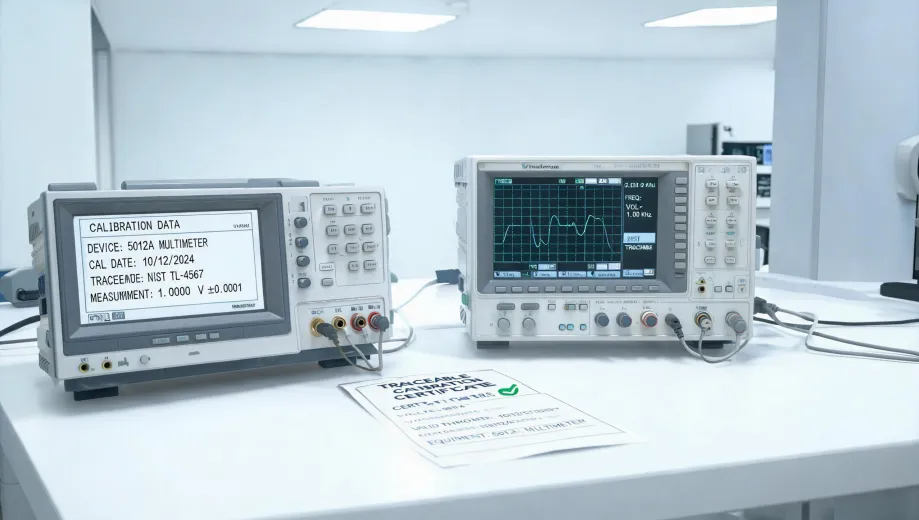
Meanwhile, the same batch hit a second snag. Our lab tech, preparing water samples for pre-installation testing, discovered the Mettler Toledo pH meter was out of calibration. Our water quality protocol requires verifying that pipeline water is within acceptable range before installation. Not a dealbreaker on its own—but combined with the condensation issue, I couldn't rule out that something in the water itself was off. The calibration process turned out to be its own mess: two of our technicians had been using different methods, and neither matched the manufacturer's original procedure. We spent forty minutes scrambling to figure out how to calibrate the pH meter Mettler Toledo specs actually called for. Turns out it required a two-point calibration against NIST-traceable solutions at specific concentrations—not the single-point routine check we'd been running. We redid it.
Back to the meters.
The Conflict
I called the supplier. The rep argued this was "minor condensation on a few units"—and cited "industry standard allows for some moisture during transit." His position: the units would dry out after installation, no impact on accuracy.
I measured. The data was the data. 83 versus 55. Out of our spec.
But the timing was brutal. Re-shipping meant rush production. The supplier's expedite fee: $3,200—assuming they could even make it work, with a three-day lead time minimum. And our install crew had a liquidated damages clause; missing this week's window meant $15,000 in rescheduling costs, not to mention the cascading effect on the entire project timeline.
Part of my team said we should just let them dry out before installation.
And that made sense. Except these units were going into underground vaults for the next five to seven years. Once they're sealed in, that's it.
(Should mention: we handle roughly 1,400–1,800 units annually. I've only rejected about 8–12% of first shipments, but every rejection triggers a vendor redo—not me eating the cost.)
The Decision
I rejected the batch.
Not "let them dry out." Not "let's do a full RH check and pull the worst ones." The entire batch was suspect on seal integrity. The supplier was furious. Their production manager called me directly. "You're going to hold our shipment over one moisture reading?"
I was blunt: if it doesn't pass spec before installation, it won't pass spec after installation. I wasn't willing to gamble on five years from now, in a vault nobody wants to dig up.
The rework took four days. We missed the Monday morning window—but only by one day, since the supplier expedited their production schedule, partly because they took the issue seriously. That extra day cost $3,200 in expedite fees plus about $2,000 in scheduling flexibility.
The Outcome
Nine units were opened, dried, and resealed. The supplier sent third-party test reports before the second shipment: relative humidity readings of 47% to 52% at the seals.
Installation wrapped on schedule. The batch has been running for fourteen months as of this writing. Zero failures.
But the cost was real. Expedite fees, scheduling costs, one very sleepless night—roughly $5,200 in cash out the door. Not the kind of money you can sue someone over. Just the cost of doing business.
What I Actually Learned
Before this, I had an unwritten rule: "If the box looks fine, we can probably make it work." That was wrong.
But the real lesson was about timing. That Saturday in March, the question came down to: was I willing to pay $5,200 for certainty?
We'd planned this project for over a year. But vendor schedules changed, timelines compressed. By late March, the quality buffer had shrunk to a single weekend.
My team made this mistake on a different project last year. I approved a batch with a minor spec deviation to save $3,500 in expedite fees. After installation, several units leaked. Repair costs plus emergency service calls: over $18,000. Now we have an internal joke: "the leaky valve costs more than the on-time valve."
Expedite fees in an emergency, though—they buy more than speed. They buy certainty. A vendor I work with once told me "on-time is an estimate, not a promise"—and you only know what that really means after you've been burned.
Our fix wasn't learning to move faster. It was starting earlier. We added quality checkpoints in the procurement workflow and built lead-time requirements into the supplier agreements. Now every vendor knows: "just barely making it" isn't in the acceptable-range spreadsheet. We pay a little more upfront. But the money we save on the back end is bigger.
Saving money on deadlines is a luxury I can't afford. I've already been down that road. I'm not going to need a second trip.