-
Who this checklist is for
-
Step 1: Define exact specs and compatibility before you request quotes
-
Step 2: Get total cost of ownership (TCO) quotes, not just unit price
-
Step 3: Verify quality and certifications—don't take claims at face value
-
Step 4: Negotiate terms and hidden fees upfront
-
Step 5: Track actual costs and review after every order
-
Common mistakes to avoid
Who this checklist is for
If you're responsible for buying lab supplies—whether it's a case of Corning vacuum filters, a new Contura CMM, or routine water meter reading services—you know the drill. You get three quotes, pick the lowest, and move on. That approach cost me $8,400 in one quarter. Here's the checklist I wish I'd had. It's five steps, and you can apply it to any lab purchase, from Corning laboratory glassware to HPLC fittings.
Step 1: Define exact specs and compatibility before you request quotes
I've seen too many orders go sideways because the spec sheet said "standard" and the vendor interpreted that differently. For example, if you're buying Agilent fittings for HPLC columns, you need to know the exact thread type, pressure rating, and material. A colleague once ordered generic fittings that leaked because they didn't match the Agilent system's specs. That mistake cost us two days of downtime and $600 in wasted reagents. So write down every requirement: dimensions, chemical compatibility, certifications, and how the item will integrate with existing equipment. Don't assume the vendor knows your setup.
Step 2: Get total cost of ownership (TCO) quotes, not just unit price
This is where most buyers get burned. That low unit price for Corning laboratory glassware looks great—until you see the $250 "special packaging" fee and $150 delivery charge. Another vendor's quote was 10% higher but included everything. Guess which was actually cheaper? I always ask for a TCO breakdown: shipping, setup, training, maintenance contracts, consumables, and disposal. Even water meter reading for your lab's cooling system can have hidden data access fees—I've seen $45 per month tacked on after the fact. Bottom line: if the quote doesn't itemize every fee, it's not a real quote.
Step 3: Verify quality and certifications—don't take claims at face value
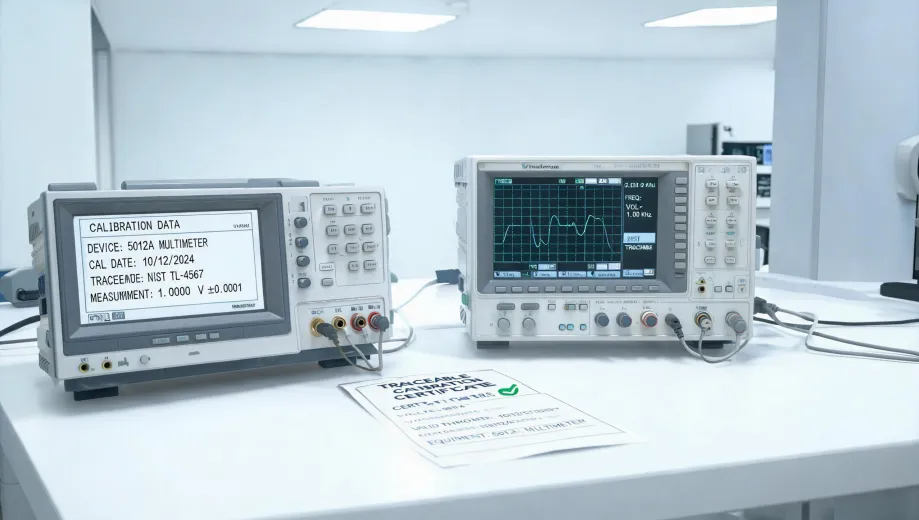
Per FTC guidelines (ftc.gov), vendors must substantiate their advertising claims. So when a supplier says "highest quality borosilicate glass," ask for the certificate of analysis. For Corning products, that's usually straightforward. For a Contura CMM or other high-value instruments, request calibration certificates and service records. I learned this in 2020, and it's saved me from at least three bad batches of vacuum filters. One vendor couldn't produce a CoA, so I walked away—even though their price was 20% lower. That $200 savings would've turned into a $1,500 problem when the filters failed under vacuum.
Step 4: Negotiate terms and hidden fees upfront
I went back and forth between two vendors for two weeks on a Corning vacuum filter contract. Vendor A offered a lower base price but had a $500 annual "service fee" buried in the contract. Vendor B was 15% higher upfront but had zero extra fees. I ultimately chose B because the three-year TCO was 8% lower. The lesson: always ask about return policies, warranty terms, and expediting fees. That "free" water meter reading service? Not free—it was $45 per month for data access. Now I require every quote to include a line item for "all fees, no surprises."
Step 5: Track actual costs and review after every order
After tracking 200+ orders over two years in our procurement system, I found that 30% of budget overruns came from unplanned shipping and expediting fees. We implemented a policy requiring quotes to include all fees, and overruns dropped by 18%. So keep a simple spreadsheet: quoted TCO vs. actual invoice. Review it quarterly. You'll spot patterns fast—like how that "cheap" vendor always charges extra for rush delivery. Looking back, I should have paid for expedited shipping on a critical Corning vacuum filter order. At the time, the $200 savings seemed worth it. But the standard shipping was delayed, and we lost a week of experiments. Given what I knew then—nothing about that vendor's reliability—my choice was reasonable. But now I always factor in the cost of downtime.
Common mistakes to avoid
- Ignoring utility costs: Water meter reading for lab equipment isn't free—factor it into your TCO.
- Assuming cheap is always better: The lowest quote has cost us more in 60% of cases. That $200 savings turned into a $1,500 problem when quality failed.
- Skipping compatibility checks: Especially for HPLC fittings or glassware that must match existing systems.
- Not asking for certifications: Per FTC guidelines, claims need evidence. Ask for CoAs, calibration certs, and service records.
This pricing was accurate as of Q4 2024. The market changes fast, so verify current rates and policies before budgeting. I learned these vendor evaluation criteria in 2020—the landscape may have evolved, especially with new technology options.