-
Water Lab Equipment Procurement: A Cost Controller's Honest FAQ
-
1. What does a Hach DR6000 UV-Vis spectrophotometer really cost to own?
-
2. Why would a water lab need a C5 thermal camera?
-
3. Which Fluke multimeter do I need for instrument troubleshooting?
-
4. Are Hach flow sensors worth the premium over alternatives?
-
5. What's the hidden cost in Hach service contracts?
-
6. Should we buy a used Hach DR6000?
-
7. How do I compare quotes when every vendor structures pricing differently?
-
1. What does a Hach DR6000 UV-Vis spectrophotometer really cost to own?
Water Lab Equipment Procurement: A Cost Controller's Honest FAQ
I've managed our water analysis equipment budget—roughly $180,000 a year across six years—and I've negotiated with more than 20 vendors. Every quarter, someone on my team asks me the same questions about Hach spectrophotometers, flow sensors, thermal cameras, and multimeters. Here are the answers I keep giving.
1. What does a Hach DR6000 UV-Vis spectrophotometer really cost to own?
The list price on the Hach DR6000 UV-Vis spectrophotometer usually lands between $12,000 and $16,000, depending on the bundle. But the sticker price isn't the number I track. In our 2023 audit, we found that consumables—reagents, standards, cuvettes—added 15–20% per year. Calibration and service contracts? Another $1,200–$2,000 annually. So when someone says "the Hach spectrophotometer DR 6000 is $13,000," I mentally add $3,500 a year for the first three years.
One thing most buyers miss: the DR6000 covers 190–1100 nm per Hach's official product page (hach.com). If you're only running standard colorimetric methods, the DR3900 does most of the same work for about $4,000 less. That's not a knock on the DR6000—it's a solid UV-Vis instrument—but matching the tool to your actual method list saved us real money.
2. Why would a water lab need a C5 thermal camera?
This one surprised our team too. The C5 thermal camera isn't for water analysis—it's for maintenance. We use it to check pump motor temperatures, electrical panels, and bearing hotspots before they fail. A single unplanned pump outage at our plant costs roughly $2,800 in lost testing time and emergency repairs. The FLIR C5 runs about $700 on the street. Payback was under four months.
Most procurement guides treat "lab equipment" and "maintenance tools" as separate categories. In practice, they share the same budget line. I learned that the hard way when we delayed a $700 thermal camera purchase and then spent $3,100 on an emergency motor replacement (not my best quarter).
3. Which Fluke multimeter do I need for instrument troubleshooting?
The question everyone asks is "which Fluke multimeter do I need?" The question they should ask is "what am I actually measuring?" For basic 4–20 mA loop checks and sensor diagnostics, the Fluke 117 (around $200) is plenty. If you're working on industrial panels or three-phase pumps, the Fluke 87V (around $400) gives you true-RMS and better accuracy.
We bought two 117s and one 87V. The 87V stays in the maintenance shop; the 117s live in the lab. Buying all 87Vs would've wasted about $200 per unit. Buying all 117s would've left our electrician under-equipped. Match the meter to the job, not the brand name.
4. Are Hach flow sensors worth the premium over alternatives?
Hach flow sensors—like the FH950 portable flow meter—cost 20–30% more than some third-party alternatives. But here's the thing: they talk directly to Hach controllers without a signal conditioner. That saves you $300–$500 per point in extra hardware, plus wiring time. When we compared quotes for a 6-point installation, the Hach flow sensors came out $600 cheaper after accounting for the interface modules.
That said, if you already have a non-Hach control system, the math changes. Don't buy Hach sensors just for the brand—buy them when the integration actually reduces total cost.
5. What's the hidden cost in Hach service contracts?
Most buyers focus on the annual percentage discount and completely miss the travel surcharges and response-time tiers. Our first service contract looked like a 12% discount, but it excluded travel ($150 per visit) and had a 5-business-day response window. When our DR6000 went down during a compliance deadline, that "5-business-day" response felt more like 5 weeks.
Our procurement policy now requires three things in every service quote: all-in travel costs, a guaranteed response time, and a spare-parts price list. That last one matters—some contracts mark up critical parts by 40%.
6. Should we buy a used Hach DR6000?
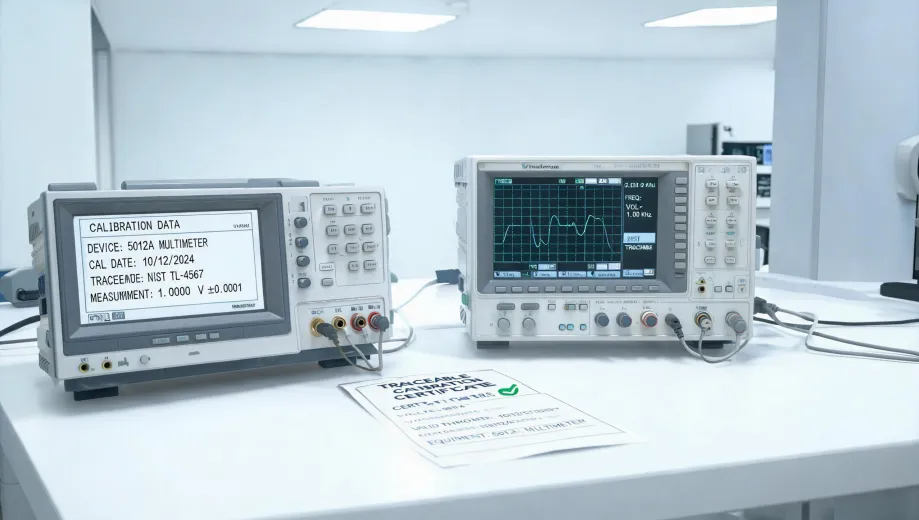
The upside was saving roughly $6,000. The risk was buying a unit with an expired calibration certificate and unknown lamp hours. I kept asking myself: is $6,000 worth potentially failing an audit? We passed on the used unit and later found a certified refurbished model from a Hach-authorized dealer for $4,500 less than new, with a 12-month warranty.
Used isn't wrong—but "certified used" is a different animal. Ask for the calibration history and lamp replacement record. If the seller can't produce both, walk away.
7. How do I compare quotes when every vendor structures pricing differently?
This is where efficiency actually becomes a competitive advantage. I built a standardized TCO template in 2022 after getting burned on hidden setup fees twice. It asks every vendor for the same six lines: equipment, installation, training, first-year consumables, service contract, and freight. When vendors know you're comparing apples to apples, the quotes get cleaner (surprise, surprise).
We also automated the quote-entry process using a simple form that flags missing line items. That cut our review time from 3 days to 4 hours and eliminated the data-entry errors we used to have. The automated process isn't fancy—it's just consistent. And consistency is what catches the $450 in hidden fees buried on page 3.
That's the short version. If you're auditing your own water lab budget, start with the TCO template before you look at any single price tag. The sticker price is the beginning of the conversation, not the end.