Let me start with an opinion that is a little uncomfortable: buying test and measurement equipment based on the lowest quote is one of the most expensive mistakes a company can make. I'm not an engineer. I'm the office administrator who has managed purchasing for a 42-person engineering services firm since 2020. I process around 70 orders a year, roughly $300,000 in purchases, across eight vendors. I report to both operations and finance, so I hear about it when equipment doesn't work. After five years of doing this, I believe in value over price. That's why I keep choosing National Instruments even when the first number on the quote makes me nervous.
The Lowest Quote Is Usually the Most Expensive
When I took over purchasing in 2020, I learned this with a data logger National Instruments sells. Wait—no. We didn't get the NI one first. We bought a cheaper logger because the quote was $900 less. It looked great on paper. But the file format was proprietary, the software only worked on one engineer's computer, and we had to manually reformat the data into Excel. That took two full days. Two days of an engineer's time at $80 an hour is $1,280. The savings disappeared before we had a single clean report. I still don't know why the export software was designed that way. My best guess is it was meant for quick field checks, not for a lab that needs traceable data.
A quote is a starting point, not the answer. It doesn't include integration, training, calibration, or the time your team spends making data usable. People in operations roll their eyes when they hear 'total cost of ownership,' but in a small company, TCO is not a theory. It's the difference between finishing a project on Friday and finishing it three weeks later.
What the NI Price Actually Covers
The National Instruments technologies—bench digital multimeter, data logger, wireless modules—are designed to work together. That's what makes the price easier to swallow. A standalone meter may look cheaper, but it doesn't share a driver ecosystem with the rest of the lab. In our lab, we have an NI data logger, a bench digital multimeter, and a CompactDAQ system for temperature and vibration. They all talk through LabVIEW. When a project manager asks for a weekly report, we don't export three files and combine them manually. LabVIEW is the reason separate pieces become one system. Plus, if a key engineer leaves and a new person arrives with LabVIEW experience, training is much smaller problem.
The second thing I pay for is support. I need a vendor that can tell me if a replacement part is compatible, and I need that answer fast. With NI, I can use the national instruments login portal to pull up manuals, downloads, and service records. Honestly, I'm not sure why the login page is sometimes hard to find online—my best guess is they have separate sections for software, support, and order history. But once you're in, it saves time. We have a serial number history for every module, which makes budgeting for calibration easier.
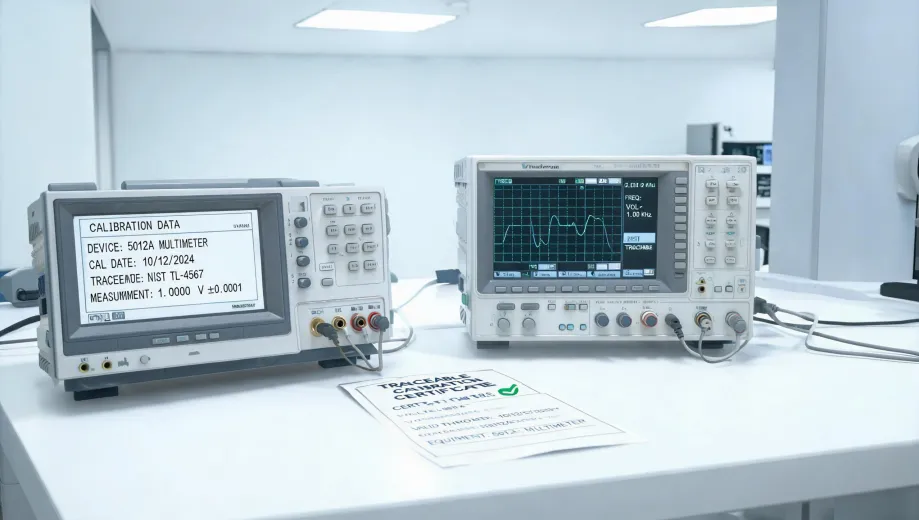
Documentation matters too. I'm the person who gets asked 'where is the manual?' One day, our electrician asked me how to use a megger insulation tester. I had to give the honest answer: I don't know. But I could find the NI measurement fundamentals guide and a few application notes, and I knew to check whether the tester had a current calibration certificate. I still don't fully understand megger testing. I've never understood why insulation testers use different voltage ranges, honestly. But I know that if you're making a safety decision based on a reading, the tool needs to be trustworthy.
Maybe that sounds like brand loyalty. It's not. In 2023, a field engineer asked for a Bluetooth multimeter so he could record readings from a motor control panel without standing next to it. I bought a low-cost model because the features looked similar and the reviews were okay. The app connected maybe one time in three, and when it did connect, the timestamp was missing. We spent almost an hour trying to get the data off the device. It would have been cheaper to stand there the whole time. We eventually used an NI wireless DAQ module—not cheap, but it actually did what it was supposed to do.
When we upgraded our lab last year, I had to weigh the risk. The upside was cleaner data and less cabling. The risk was a learning curve and a bigger purchase order. I kept asking myself: is the integration worth potentially missing the quarterly budget? I calculated the worst case—a delayed project and a few thousand in training. The best case was that we'd stop manually exporting from three different instruments. The expected value said go with NI. The downside felt survivable, so we did it.
Hidden Costs: Shipping and Marketing
Then there are hidden costs that look trivial until they bite. A few years ago, a vendor offered 'free shipping' on a data logger. What they didn't say was that it would ship by USPS Retail Ground. I have no problem with USPS for letters and small envelopes—according to USPS pricing effective January 2025 (usps.com), a First-Class Mail letter is $0.73 and a large envelope is $1.50—but a data acquisition module is not an envelope. The cheapest delivery speed is not the cheapest when half the lab is standing around waiting. The delay costs more than the courier. Now I check the delivery method before I check the price.
Marketing claims are another trap. Per FTC advertising guidelines (ftc.gov), vendors have to be able to substantiate their claims, but 'substantiated' does not mean 'useful for your workflow.' I once bought a data logger because the box said 'plug and play.' It wasn't. The manual buried the limitation on page 14—it couldn't log more than 100 samples in a session. The price was low, but the real cost was the engineer's time and my conversation with the project manager. I don't remember the brand, and I'm not naming names. I just remember the lesson.
But Sometimes Cheap Is Fine
Now for the counterargument: sometimes cheap is fine. If you only need to check whether a wire is live, a $15 non-contact tester is fine. If you need basic continuity, a simple multimeter is fine. I'm not suggesting everyone run out and buy a full National Instruments stack. But here's my line: if a measurement goes into a report, a safety check, or a customer deliverable, the cost of being wrong is almost always bigger than the cost of the tool. That's the value-over-price argument in one sentence.
I also know some projects have a budget that makes the NI quote feel impossible. That's the moment to be honest about what you can postpone. In our 2024 vendor consolidation project, we moved from five separate test equipment suppliers to two primary ones. It wasn't because the new suppliers were cheap; it was because fewer vendors made invoicing, calibration tracking, and support easier. My accounting team spends less time chasing receipts. The vendors who couldn't provide proper invoicing cost us more than any discount—one of them caused $1,400 in rejected expenses. That number stays with me.
Bottom Line
So, basically, stop asking which option has the lowest price. Start asking which option is the least expensive to own. If the answer is still the cheap one, buy the cheap one without guilt. But if the answer is a National Instruments data logger, a bench digital multimeter from their line, or a system that makes your team's work easier, don't let the first line of the quote scare you. Do the math. The number that matters is the one nobody puts on the quote: the cost of redoing the test, the lost day of analysis, or the phone call to a support line that doesn't know your equipment. That's what I'm really paying for. As of early 2025, our lab runs on NI hardware for almost every measurement that needs data. If you're making the same decision, spend time with the manuals and the login portal, ask for the calibration policy, and verify current pricing before you commit. The test equipment market changes fast, so this isn't financial advice—just the honest opinion of an admin who has signed too many purchase orders to count. (And has the spreadsheets to prove it.)