I Almost Made a $12,000 Mistake on NI Gear
Let me tell you about a quote I got last year. A team lead came to me, all excited. He'd found a 'deal' on a PXI chassis from a third-party reseller. Saved us about 30% off list price. He was ready to pull the trigger.
I stopped him. And honestly? I almost didn't. The price looked that good. But something felt off. So I ran the numbers the way I've been doing it for the past 6 years—total cost of ownership, not just the purchase order.
What I found was a pretty good example of why buying National Instruments hardware isn't like buying a laptop. You're not just buying a box. You're buying into an ecosystem. And that ecosystem has a price tag that's not always obvious on the first quote.
The Problem Nobody Talks About: It's Not the Hardware, It's the Everything Else
When people come to me asking about National Instruments gear, they usually say something like: "This module costs $X. Can you find me a better price?" They're looking at the line item for the hardware.
And yeah, I can usually find a better price on the hardware itself. That's my job. But after a few years of tracking our annual spend—about $180,000 cumulatively across all our measurement and automation needs—I've learned that the hardware is often the cheapest part.
The real cost drivers are hidden in places most engineers don't look: software licenses, calibration cycles, support contracts, and what I call 'integration friction.'
The Software Trap
LabVIEW is amazing. I'm not gonna argue that. But if you're not budgeting for the software from day one, you're setting yourself up for a surprise. A single LabVIEW Base license might run you a few hundred bucks. The Full version? More. The Professional version with all the toolkits? That's a different conversation entirely.
Here's what bit us once: we bought a CompactDAQ system, got the hardware, installed the driver software (NI-DAQmx, which is free, thank goodness), but then realized we needed the LabVIEW Real-Time Module to actually control it the way we wanted. That was an extra cost we hadn't planned for. It took me a few years and about 150 orders to understand that vendor relationships matter more than vendor capabilities.
Looking back, I should have asked the sales rep, "What software will I absolutely need to make this work for my specific application?" At the time, I assumed the driver software covered everything. It didn't.
The Calibration Cycle
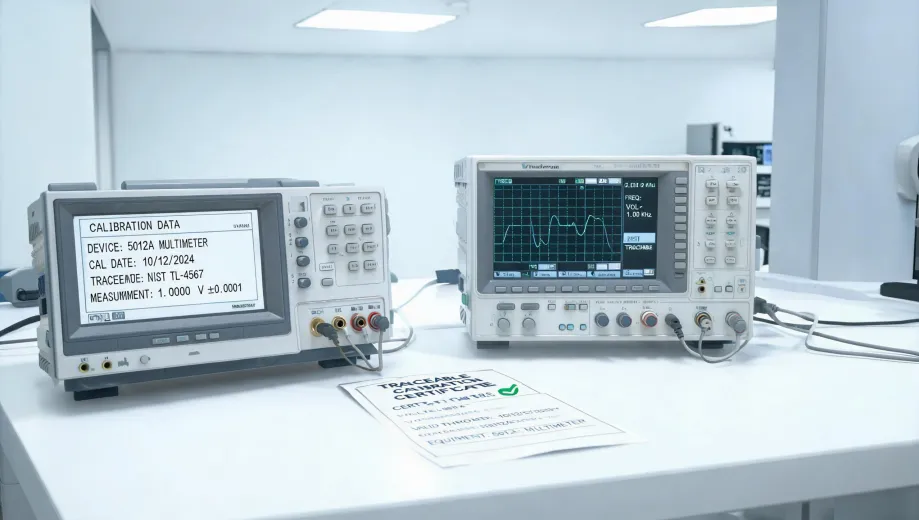
Another one that slips through the cracks is calibration. A $2,000 NI oscilloscope module? Sure, the sticker price is $2,000. But do you know when it needs to be recalibrated? And what that recalibration costs?
According to NI's documentation, most of their instruments have a recommended calibration interval of 1-2 years. If you're in a regulated industry—pharma, aerospace, automotive—you can't skip that. A single module calibration through NI can cost anywhere from $300 to $800, depending on the module. If you've got a rack with 10 modules, that's $3,000-$8,000 every 1-2 years just to keep your equipment valid.
So glad I built that into our procurement policy early on. We now factor in the cost of calibration over the expected lifespan of the instrument—usually about 5 years. It changes the math significantly.
Support Contracts: The Invisible Line Item
NI's Standard Service Program (SSP) is another one. It covers software updates and technical support. Is it mandatory? No. But if you're doing anything complex and your team relies on NI support to troubleshoot issues, skipping SSP is risky.
We skipped it one year to save about $1,200 on a LabVIEW Professional license. That 'cheap' option resulted in a $1,200 redo when quality failed and we had to pay a consultant to figure out a driver compatibility issue that SSP support would have solved over the phone. Dodged a bullet when I double-checked the quantities before approving. Was one click away from ordering 10x what we needed.
The Deeper Issue: Why 'Cheaper' Hardware Often Costs More
So what's the alternative to buying direct from National Instruments or an authorized distributor? You can buy used gear on eBay. You can buy from third-party resellers. You can even buy clone modules from some companies. And sometimes, that works fine.
But here's the thing I've learned after comparing costs across 8 vendors over 3 months using my TCO spreadsheet: the risk isn't that the hardware won't work. The risk is that you'll spend more time and money making it work than you saved buying it.
What was best practice in 2020 may not apply in 2025. The fundamentals haven't changed, but the execution has transformed. A used PXI module from 2018 might look like a great deal at 50% off. But if it's not compatible with the latest version of LabVIEW you're running? Or if it doesn't have the latest calibration? That 'deal' just became a headache.
From Sticker Shock to Total Cost Insight
I've refined our procurement process over the years. Now, when my team requests a new NI instrument, they have to fill out a simple cost sheet that includes:
- Hardware cost (the sticker price)
- Software licenses needed (one-time vs. recurring)
- Calibration schedule and estimated cost over 5 years
- Support contract cost (SSP or equivalent)
- Estimated integration time (based on past projects)
It's not perfect, but it's saved us from more than a few 'good deals' that would have ended up costing more in the long run.
So if you're budgeting for National Instruments gear, do yourself a favor: add 20-30% to the hardware cost in your initial estimate. Not because the hardware is overpriced, but because the ecosystem around it has costs that are easy to overlook when you're focused on the shiny new oscilloscope or data logger.
Prices as of early 2025; verify current rates with an NI sales rep. But honestly? The numbers won't have changed that much.