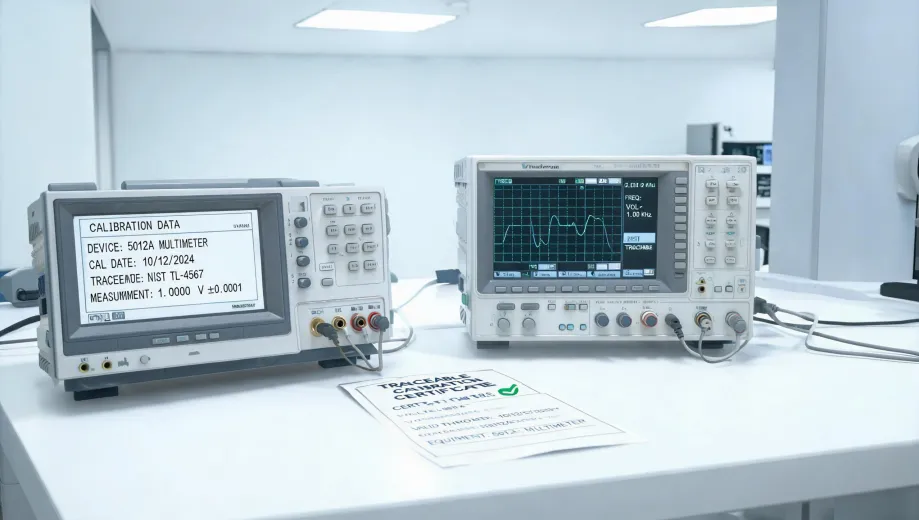
NI's Upfront Price is High, but the Total Cost of Ownership is Often Lower
Let's cut to the chase. If you're comparing quotes for a data acquisition system and National Instruments is 30-40% higher than a competitor, don't dismiss it. In my experience managing a six-figure equipment budget, that higher sticker price often ends up being the cheaper option over 3-5 years. The real savings aren't on the invoice—they're in the integration, support, and maintenance costs that never show up on a single line item.
I've been a procurement manager for a mid-sized automotive testing firm for six years. I manage a $180,000 annual budget for test equipment and have negotiated with over 25 different vendors. I've learned the hard way that the lowest quote is almost never the lowest cost. This article is about why that's especially true when you're looking at National Instruments.
The Hidden Costs of the 'Cheaper' Alternative
I almost made a costly mistake in Q2 2023. We needed a 32-channel thermocouple data logger for a new engine test bench. Vendor A (a generic brand) quoted $4,200. National Instruments quoted $5,800 for a similar spec. My boss asked, 'Why are we paying 38% more?' I almost went with Vendor A based on price alone.
Then I dug into the fine print. Vendor A's quote was just for the hardware. It didn't include:
- Software: Their basic logging software was $800 extra. A proper analysis package? $1,200.
- Calibration: NI's quote included an ISO 17025 certificate. Vendor A charged $350 for a 'basic' one.
- Integration: We'd need to write custom drivers to interface with our LabVIEW system (we're an NI shop). That was 40 hours of an engineer's time—about $4,000.
- Support: NI's standard support (phone, email, remote) was included for two years. Vendor A's support was $200/hour after the first year.
When I calculated the total cost over three years, Vendor A came to $9,500. NI? $6,400. The 'cheaper' vendor would have cost us 48% more.
People assume the lowest quote means the vendor is more efficient. What they don't see is which costs are being hidden or deferred.
The Software Trap
It's tempting to think you can just compare hardware specs. But identical hardware specs from different vendors can result in wildly different outcomes. The biggest variable is the software ecosystem.
NI's LabVIEW is a beast to learn, but once your team is proficient, it's incredibly efficient. We've been using LabVIEW since 2018. Every new NI instrument we buy integrates with our existing code base in hours. Every 'cheaper' alternative forces us to start from scratch or buy a separate software package. That transaction cost—time spent learning, integrating, debugging—easily wipes out any hardware savings.
In 2021, we bought a non-NI oscilloscope to 'save money.' The hardware was fine. But the software was clunky, the data export formats were incompatible with our analysis pipeline, and we spent three months building a bridge. That was a $12,000 mistake in engineering time alone. The $400 we saved on the hardware was a joke.
Why NI's Pricing Model Works (and When It Doesn't)
NI's pricing is transparent. It's high, but it's clear. They list the base system, the software modules, the warranty options, the calibration packages. You can see what you're getting. That transparency is rare, and it's why I trust them.
I've learned to ask 'what's NOT included' before 'what's the price.' The vendor who lists all fees upfront—even if the total looks higher—usually costs less in the end. The vendors with the lowest base price often rely on add-ons, 'premium' configurations, and surprise fees to make their margin.
That said, NI isn't always the right choice. If you have a very simple, one-off measurement need, a dedicated device from Fluke or a basic data logger from a generic brand might be perfectly adequate. If your team has no experience with LabVIEW and no time to learn, the NI ecosystem is a liability, not an asset.
When to Go NI
- You need modularity and scalability (e.g., a test system that will grow over 5 years).
- Your team is already invested in the NI ecosystem (LabVIEW, PXI chassis).
- Regulatory compliance requires certified calibration and traceability.
- You value long-term support and predictable costs.
When to Skip NI
- You need a single, fixed-function device (e.g., a basic handheld multimeter).
- Your budget is extremely tight and cannot absorb the upfront premium.
- Your application is so simple that integration costs are negligible.
The Bottom Line
The 'National Instruments premium' is real, but it's rarely a markup for nothing. You're paying for an integrated platform, a mature software ecosystem, and a support structure that reduces your total cost of ownership. For complex, long-term projects, it's often the most cost-effective choice.
But don't take my word for it. Do your own TCO analysis. Get quotes from 3-4 vendors (including NI). List every cost you can think of—hardware, software, calibration, integration, training, support, downtime risk. Then compare the three-year totals. You might be surprised.
I built a spreadsheet for this (note to self: I really should publish a template). If you want a copy, send me a message. It'll save you the headache I had in 2023. (This was back in Q4 2024, by the way—pricing may have changed, but the logic hasn't.)